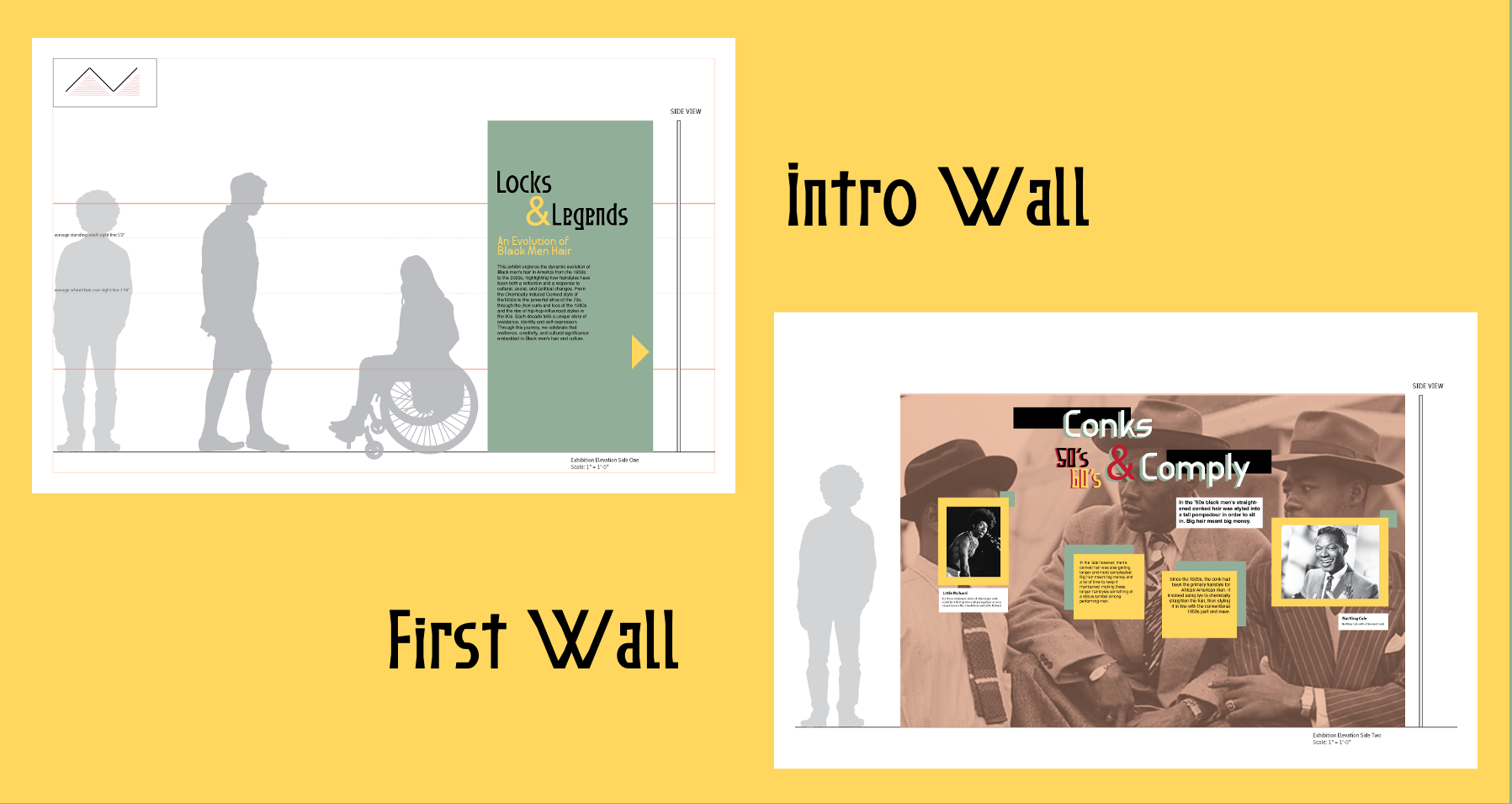
Locks and Legends is a conceptual museum exhibit that explores the cultural, historical, and social evolution of Black men’s hairstyles in the United States.The project investigates how hairstyle trends reflect broader historical contexts, including identity, cultural expression, and societal influence.The final outcome was a scaled environmental design model of a temporary exhibit, combining spatial planning, environmental graphics, typography, and information design to guide visitors through a timeline of Black hair culture. The exhibit was designed as a tri-wall, U-shaped exhibition environment, allowing visitors to move through different decades while maintaining the freedom to explore the space non-linearly.
The Challenge
Black hair has long served as a powerful symbol of identity, resistance, and cultural expression. However, many narratives surrounding Black men’s hairstyles are fragmented or disconnected from their historical context. The challenge was to design an exhibition that communicates:
The historical evolution of Black men’s hairstyles
The cultural significance of hair within Black communities
The relationship between hairstyle trends and social movements
The exhibit needed to balance education, storytelling, and spatial experience, while encouraging visitors to reflect on the deeper meaning behind hairstyle trends.
Research and Inspiration
Cultural Research
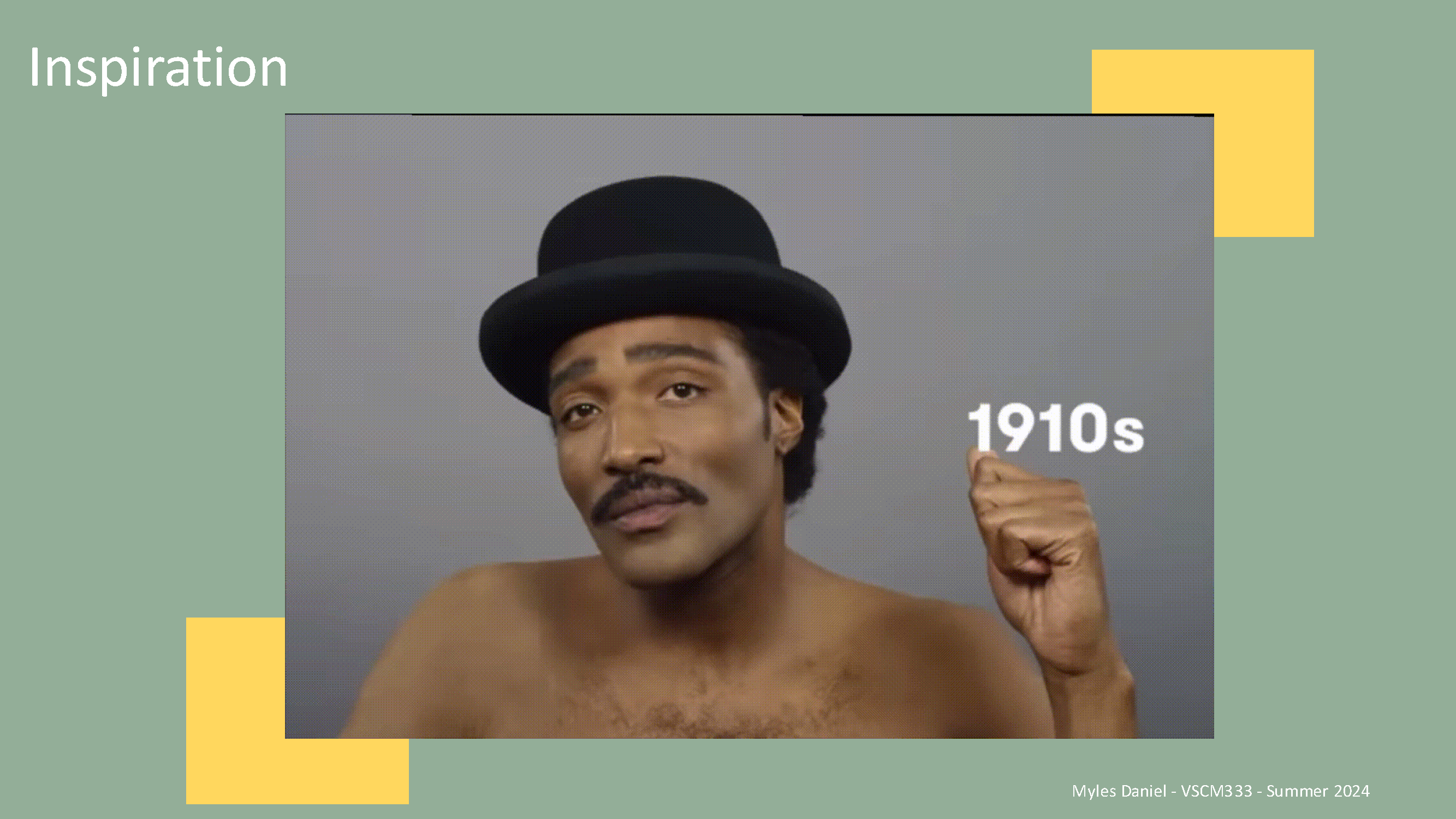
The research phase explored the historical and cultural significance of Black hairstyles in America. Sources included historical archives, cultural research articles, and documentaries examining the evolution of Black hair culture.
The research examined how hairstyles have been influenced by
Social Movements
Cultural Identity
Fashion Trends
Political & Social Climate
Exhibit Research
In addition to cultural research, the project also explored best practices in exhibition design.
Areas of study included:
Environmental graphic design systems
Museum storytelling strategies
Spatial navigation and wayfinding
Exhibit scale and visitor movement
These explorations helped determine how visitors might interact with the space and navigate the historical timeline.
Design
Design Goals
Future expansions of this project could include
Communicate historical progression
Exhibit needs to clearly illustrate the evolution of hairstyles across multiple decades
Create an engaging spatial narrative
Encourage exploration
Design Process
Concept Development
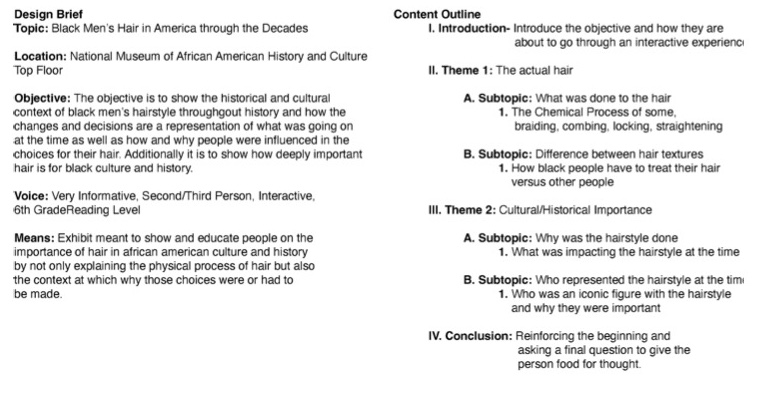
The initial phase focused on building a design brief and concept outline for the exhibition. Idea mapping and mood boarding were used to explore visual themes, cultural references, and exhibit storytelling strategies. This stage helped define the tone and direction of the exhibit.
Exhibit Layout and Spatial Planning
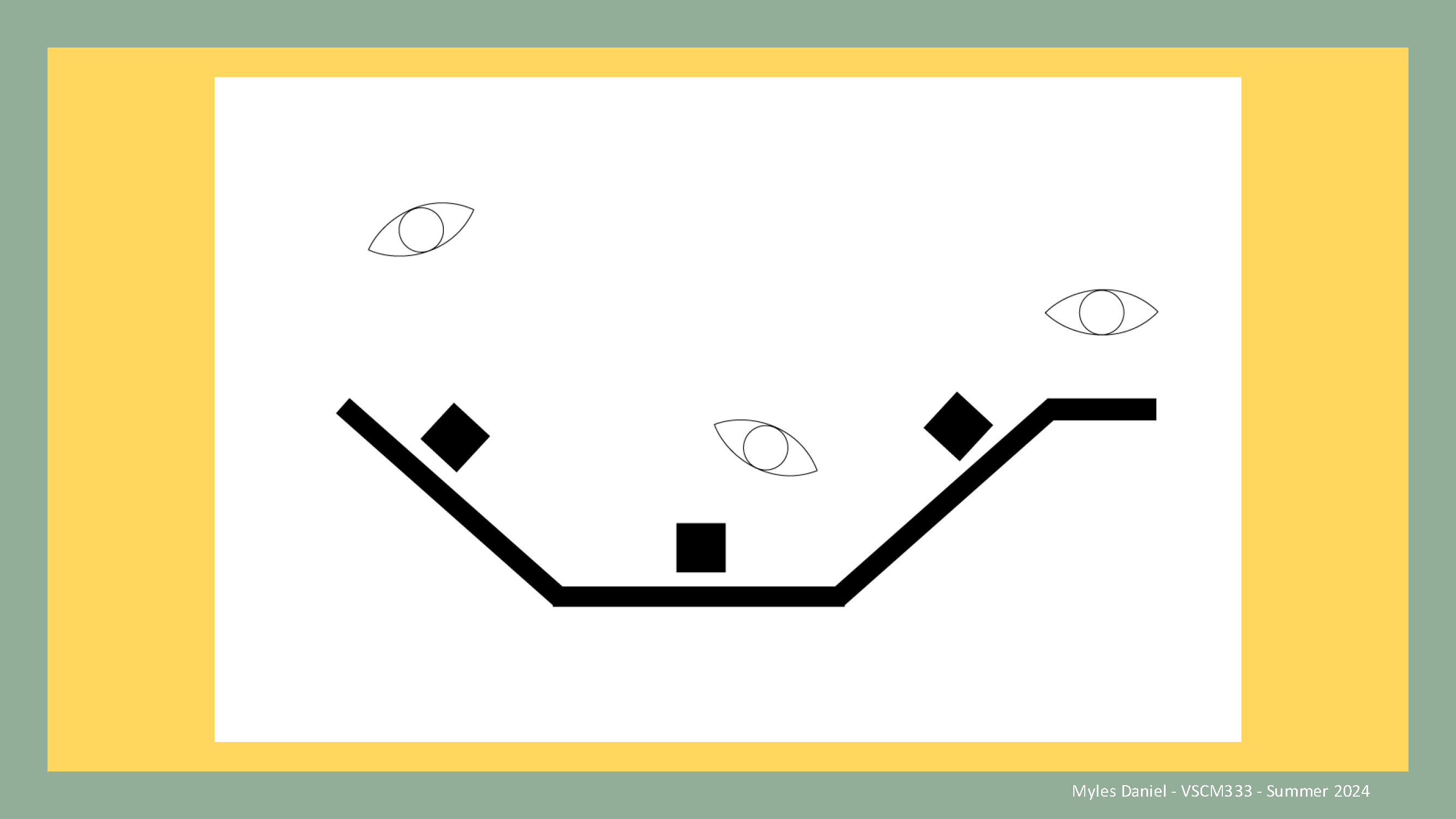
The exhibit was designed using a tri-wall, U-shaped layout. This layout allowed the walls to present information chronologically while still giving visitors the freedom to explore the exhibit non-linearly. The open layout mirrors the idea of personal choice and identity, themes closely tied to hairstyle expression. Visitors can move between decades and compare how hairstyles evolved over time.
Information Design and Visual Hierarchy
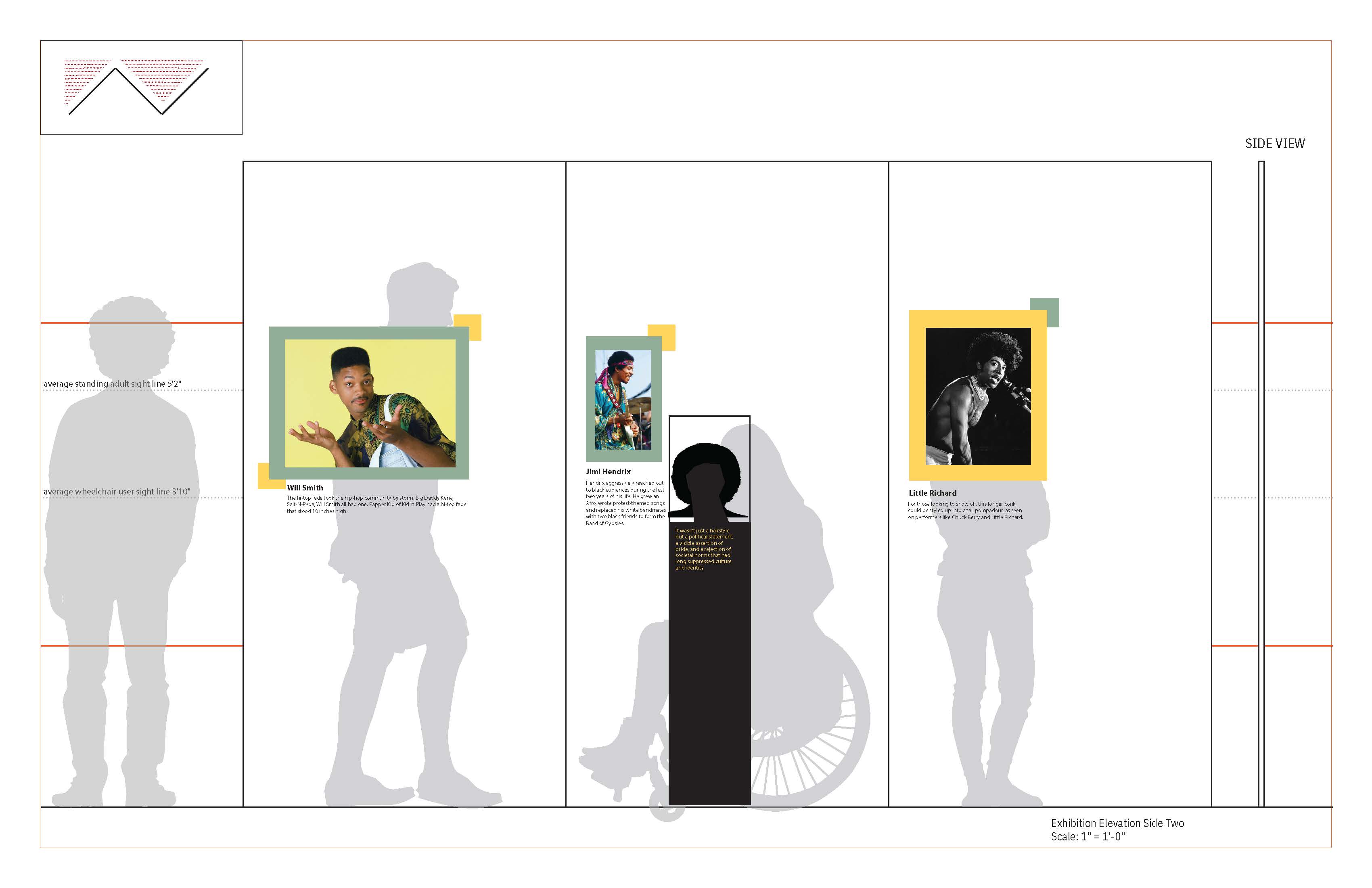
Using Adobe Illustrator, I created scaled layout designs using a grid system and architectural scaling references.
This stage focused on:
Information hierarchy
Text readability at exhibition scale
Visual balance across panels
Historical timeline clarity
The goal was to ensure the exhibit could communicate complex information clearly while maintaining a visually engaging environment.
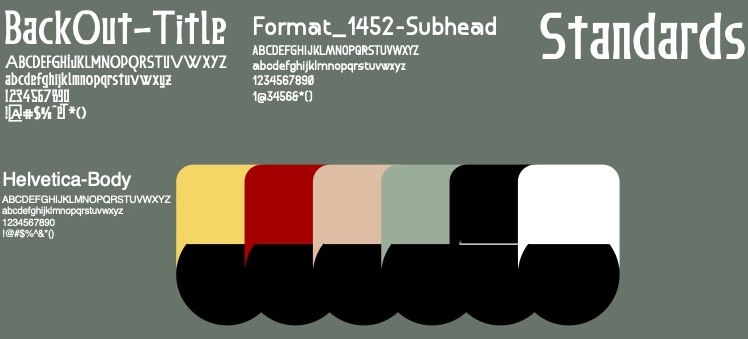
Branding and Graphic System
To unify the exhibit visually, I developed a cohesive environmental graphic system including:
Exhibit Logo
Typography System
Color Palette
Panel Layout Structures
Scale Modeling and Fabrication
To unify the exhibit visually, I developed a cohesive environmental graphic system including:
Exhibit Logo
Typography System
Color Palette
Panel Layout Structures
Final Outcome
The final deliverable was a scaled environmental exhibit model representing the complete Locks and Legends experience. The exhibit includes:
A spatial timeline of Black men’s hairstyles
Environmental graphic panels communicating cultural context
A central interactive element highlighting contemporary hairstyle trends
A layout designed to encourage exploration and comparison across decades
The project demonstrates how graphic design, spatial storytelling, and cultural research can combine to create immersive educational experiences.
Challenges & Lessons Learned
One of the main design challenges involved balancing open spatial exploration with clear narrative flow.
The open layout allowed visitors to move freely through the exhibit, but it also increased the overall footprint of the installation.
In future iterations, the spatial structure could be adjusted to create a slightly more guided pathway while still maintaining opportunities for exploration.
Reflections
This project strengthened my understanding of how graphic design can shape experiences within physical environments.
Through the process, I explored how typography, layout, and spatial planning interact to guide visitor movement and communicate historical narratives.
The project also deepened my appreciation for environmental design as a medium for storytelling.
Next Steps
Future expansions of this project could include
Incorporating digital media such as video or audio storytelling
Adding tactile or textural elements to enhance sensory engagement
Expanding the exhibit into a larger museum-scale installation